What a Sage PCN and a Community Corner show us about the work at the heart of healthcare
The November 2025 Brompton Health PCN (primary care network) meeting began in a familiar way.
A room full of clinicians and healthcare workers sat patiently working through spreadsheets, service updates and new requirements. Important conversations, certainly - about IT systems, digital workflows, the potential use of chatbots to manage patient queries. How to do more with less. Necessary, logical, efficient. And also unmistakably left-brain, abstracted from the messiness of real lives.
Then something shifted.
(And it wasn’t just down to the arrival of lunch, though of course we all know how very important it is to break bread together 🙂)
Colleagues from across the PCN began sharing short vignettes from their practices, stories of a different kind of work. Work not dictated from above, but generated through a desire for more compassionate care. As these stories were shared, the energy in the room noticeably changed. What emerged were accounts of care that felt human, relational and quietly - or sometimes loudly - creative. Often unseen work, happening at the edges of the system, yet vital to the mending and repairing of our social fabric.
“This is not soft work. It is skilled, relational labour.”
Karen Rydings from Stanhope Mews Surgery and Faith Williams from North West London ICB spoke about bringing together a pan-PCN Patient Participation Group. Bilal Sahib from Abingdon Health Centre shared the powerful impact of Neighbourhood Navigators. There was laughter and warmth as people heard from Angela Garvey-Hammond about The Good Practice, where walking, group singing and even an accordion-playing patient had created joy and connection. Lesley French spoke about relational work at Kensington Park Medical Centre, and Claire Scudder from The Chelsea Practice shared how festive activities were created with and for patients.
Individually, these might sound like small things. Together, they pointed towards something different – a more humane way of working, rooted in relationship.
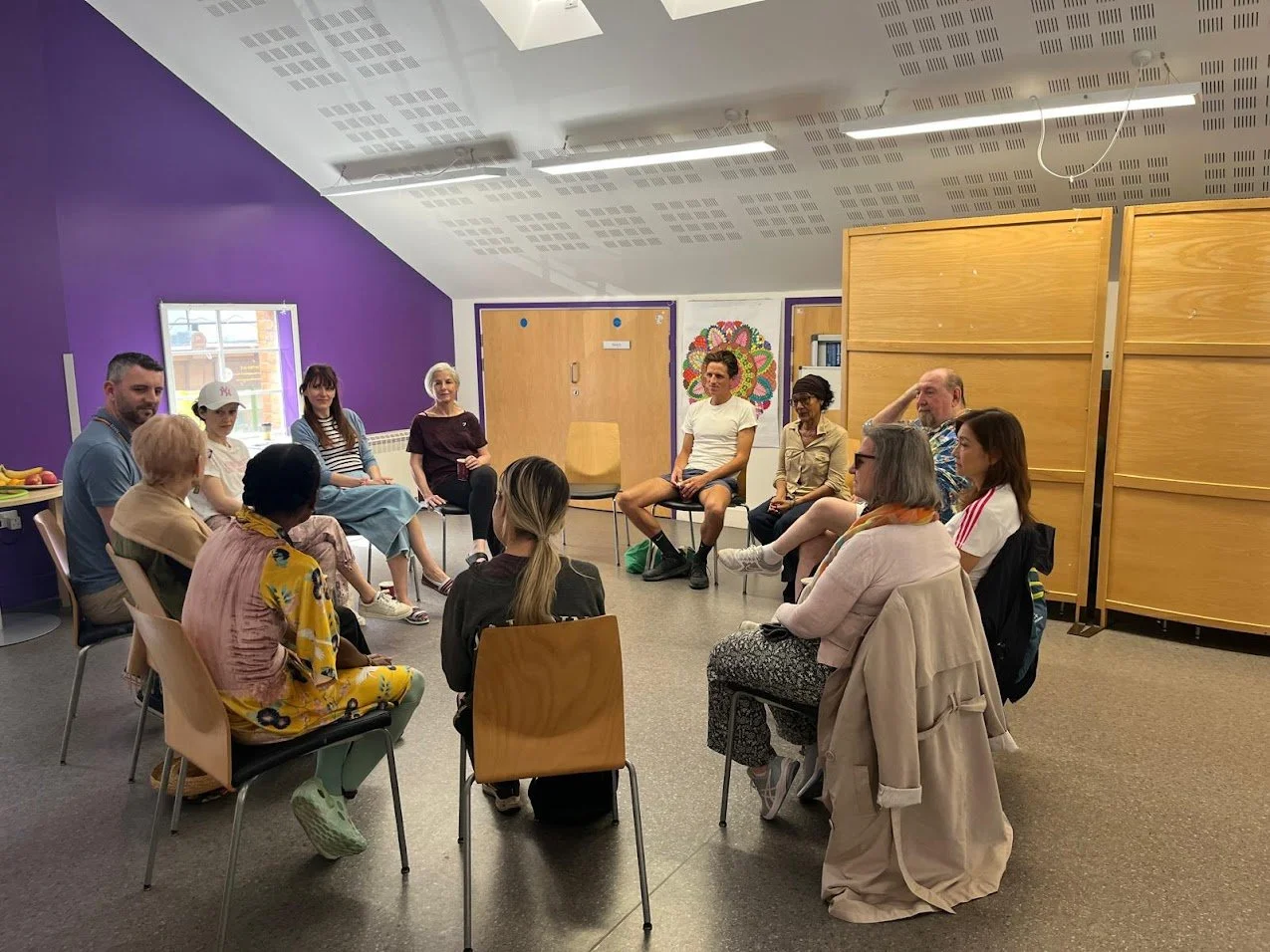
It was in this context that Andrew Levesconte, a care navigator working within Brompton PCN and based at the Health and Wellbeing Hub at Violet Melchett Health Centre, shared a story from Community Corner.
What follows is Andy’s account – a story about what becomes possible when we slow down, work across boundaries and stay alongside someone long enough for trust and change to emerge.
Community Corner – creating a different kind of space
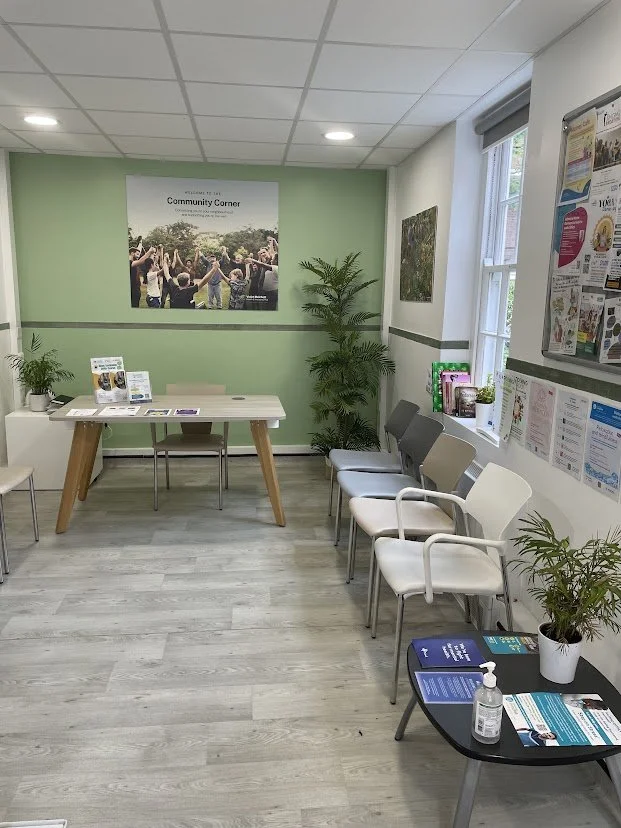
“I work as a care navigator at Violet Melchett, rooted in the Health and Wellbeing Hub. I think of Community Corner as our superpower. It’s a drop-in space, open, informal and relational, where people don’t need to arrive with a clear agenda or a neatly packaged problem.
Importantly, it’s not limited to one GP practice. Other practices across the PCN can refer in, making it a shared resource and a living example of collaborative working in primary care.
Community Corner doesn’t start with forms or assessments. It starts with presence. With conversation. With creating enough safety for someone to begin where they are.
A GP referred a woman in her mid-forties to me. She was living with bipolar disorder and anxiety and was seeking support for hoarding behaviours. When I first made contact, engagement was difficult. Her anxiety was high and one-to-one appointments felt overwhelming.
So instead of pushing ahead, I suggested something different, coming along to Community Corner.
That turned out to be a pivotal moment.
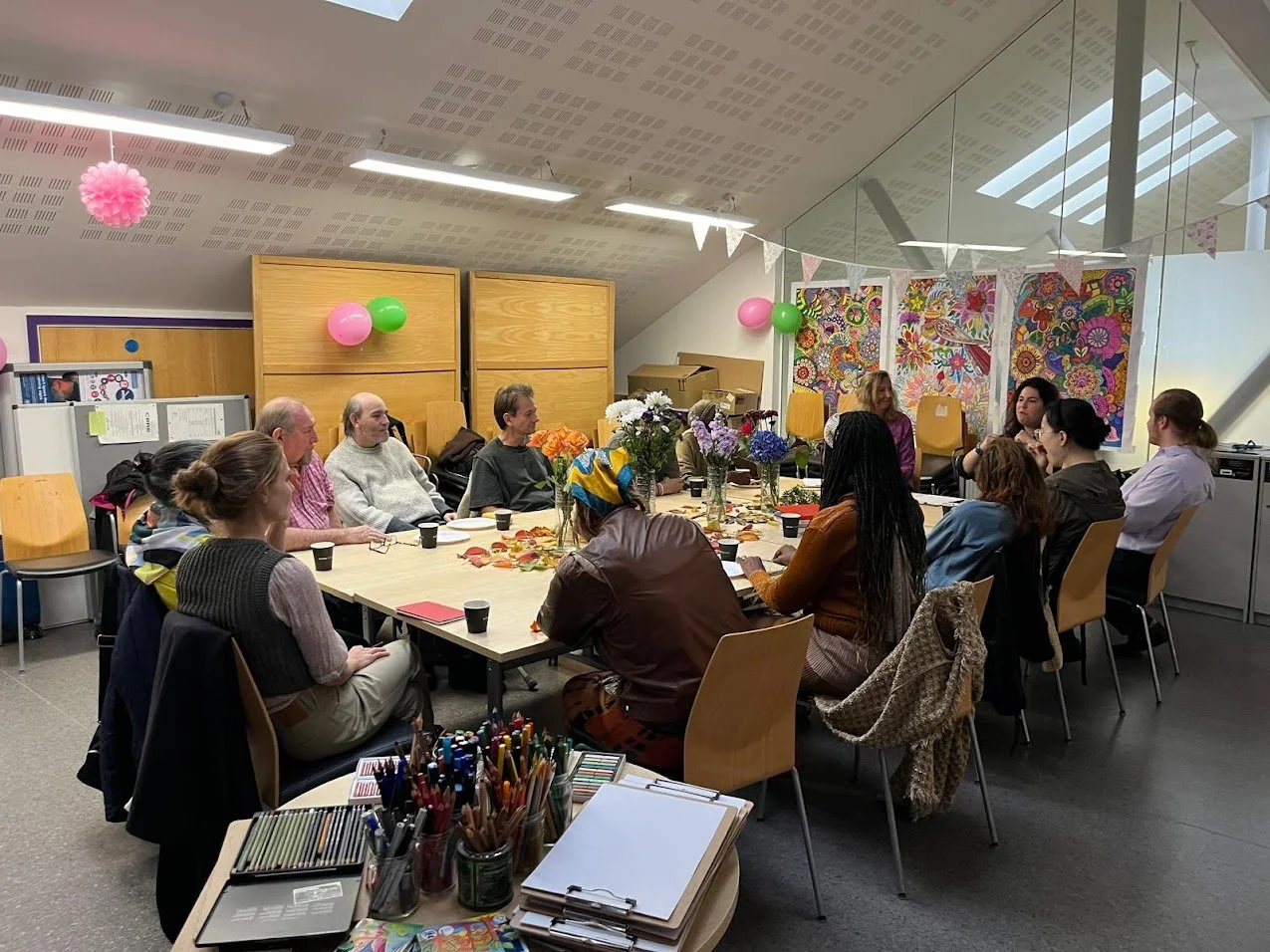
The drop-in sessions allowed trust to develop gradually. There was no pressure to disclose everything at once, no sense of being “worked on.” Over time, familiarity grew. Conversations deepened. Eventually, one-to-one work became possible – not because it was imposed, but because the conditions felt safe enough.
As our relationship unfolded, she shared more of what she was carrying. She was off work because of her mental health and anxious about returning. She also spoke about the emotional weight beneath the hoarding, a strong attachment to her late mother’s belongings following her mother’s death the previous year.
What emerged wasn’t simply a hoarding issue. It was unresolved grief, layered loss in many forms resulting in a nervous system under strain.
Working together, across systems
Rather than trying to fix everything at once, we broke the work into manageable strands. One of the quiet strengths of the care navigator role is time: the ability to sit with complexity and move at a human pace.
Together, we drew in the right supports around her. She received tailored help to return to work, access to peer support and practical guidance around hoarding, and space to process her grief alongside others who understood loss. Alongside these more formal supports, we explored ways of grieving that felt meaningful to her. Over time, she went on to establish a monthly Grief Circle with close friends, something sustaining, relational and deeply her own.
This wasn’t a single intervention. It was a web of support, woven collaboratively and held over time. With that support in place, things began to shift. She returned to work with confidence, became actively involved in peer support around hoarding and found a way to grieve that felt held rather than isolating. And although she was formally discharged, she continues to attend Community Corner events, remaining connected, known and supported within her local community.”
Why this story matters
This story matters because it shows what becomes possible when we resist the urge to break people into problems and instead stay alongside them, over time.
It shows the value of continuity. Of relationships that are not time-limited to an appointment slot. Of boundaries that are porous rather than rigid. Of community spaces that sit alongside clinical care, not as a “nice extra,” but as part of the core work of healing.
It also points to what a Primary Care Network can become when it works creatively and collectively – sharing resources, trusting roles like care navigation and allowing care to grow in forms that don’t always fit neatly into pathways or spreadsheets.
“Health is not something delivered to people, but something grown – together.”
What was palpable in that November meeting was the sense that this is already happening across Brompton PCN. Often quietly. Often at the edges. But with real impact.
This is not soft work. It is skilled, relational labour. It takes time, trust and the courage to work with complexity rather than around it.
It reflects a more Sage way of working – one that stays with people, recognises that health cannot be delivered at arm’s length and remembers that what truly sustains us is grown in relationship, together.
#sagepractice
#sagePCN
#londonsage
#neighbourhoodworking
#slowmedicine
#relationshipcentredcare
#creativehealth
#staffwellbeing
#humanityinhealthcare
With many thanks to all the partner practices of the Brompton PCN and to Fiona Butler and Helen Dunford from Violet Melchett Health and Wellbeing Hub and Isabella Zdesar from North West London ICB who invited me to join their meeting on behalf of the Sage Practice Network