

By the Fireside
Pondering the importance of stories
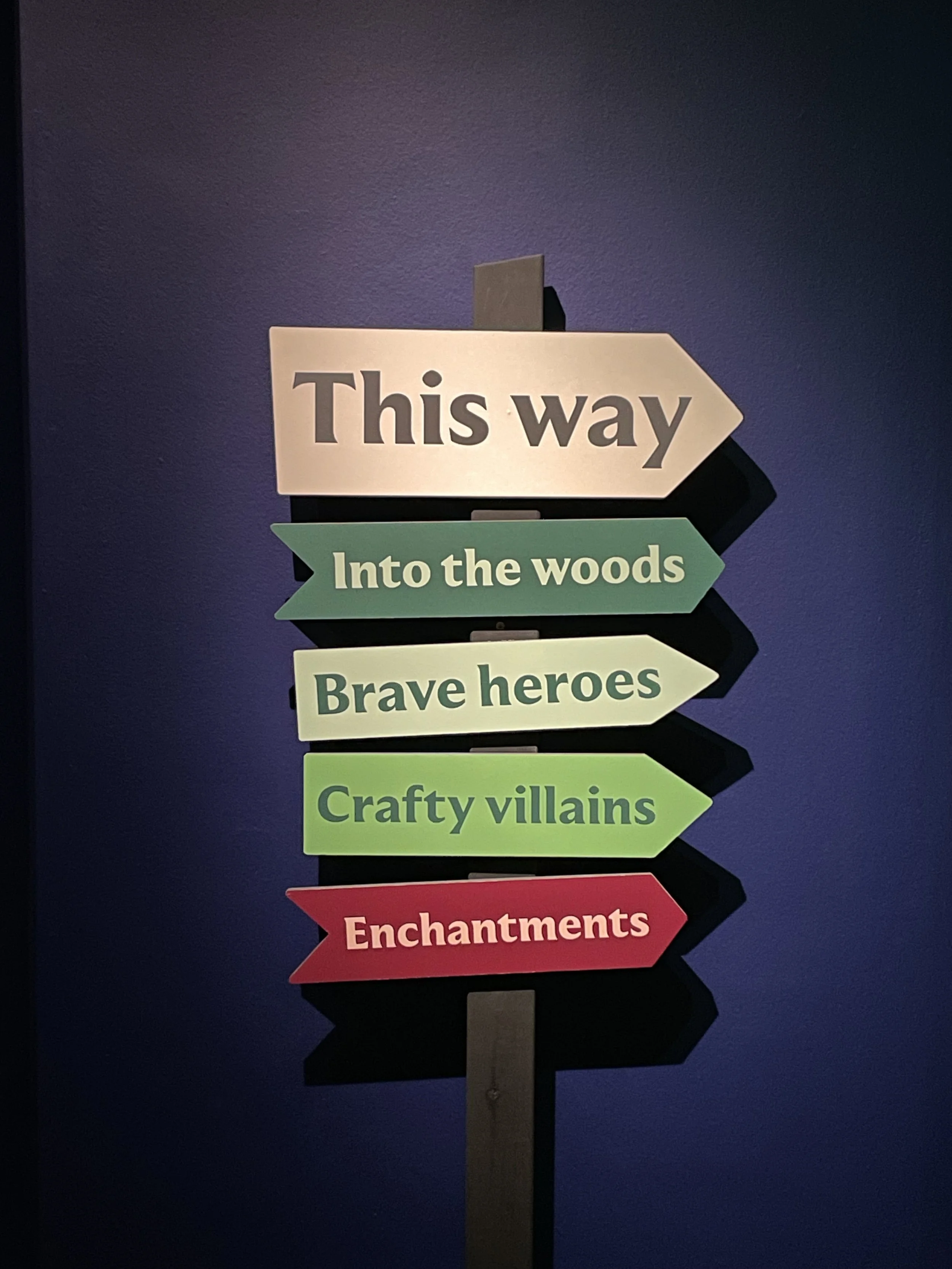
Why are stories so important to us humans? I've woken early, struggling to put together a bio for the Journal of Holistic Healthcare as a header or introduction to a short story, entitled A Fireside Tale. I’d written it as a first-night bedtime story for the friends and future-friends who'd gathered at the Quadrangle for a retreat that was organised at the start of Jane Riddiford’s month long visit, her first since returning to New Zealand
Jane is a storyteller. We'd met in one of her gardens and bonded during the development of her charity, Global Generation's Story Garden in the meanwhile-space between the British Library and the Francis Crick Institute. The garden was to bring a bit of the wild, in-between, before the building of the Alan Turing Institute arrived to claim the site. That space felt deeply symbolic, caught between two large edifices holding very different types of knowledge. From the mythic to the scientific. A thin place, you might say, borrowing from the Celtic tradition that speaks of locations where the boundary between the everyday world and something deeper, something older, becomes strangely permeable. The Irish monks actively sought such places out. I've come to think that the best stories find their way through the same cracks.
I knew that a good story told by a fire was powerful magic, transporting a group collectively to other times and other places. A conjuring of sorts. You'd return after the listening, somewhat altered, different perspectives, slightly shifted, seeing the world anew. There is, it turns out, deep evolutionary reasoning behind this feeling. The anthropologist Robin Dunbar has written about how firelight fundamentally changed human cognition and social bonding. The campfire extended the day, and those evening hours became the original crucible of storytelling. Around 80% of campfire conversation in hunter-gatherer societies, Dunbar found, was narrative, far higher than during daylight hours. Fire, warmth, the darkness pressing in at the edges, the flicker of light, all of it drops us into a more open, less defended state. The fireside is not merely a backdrop to a story. It is its natural habitat. When we gathered together with Jane that first evening, we were, knowingly or not, recreating the oldest technology of human connection.
A Fireside Tale emerged in me soon after leaving work that made sense of my own experience of spending over three decades in medicine listening to countless stories. I say emerged because it felt like the bubbling up of various tales I'd heard, as though they'd been waiting for a moment to nestle together. Stories, in the oldest traditions, were never really owned, they moved through tellers, gathering a little of each person's experience as they went, before passing on. I was at my own threshold and found myself writing a series of them, one after another. Looking back, I was obviously trying to make sense of this transition, this change, perhaps figuring out which way to go when I'd been travelling such a set and straight channel for so long. The one laid out for me in medicine.
I spent years in a small room in our Kentish Town practice. Holidays seemed few and far between. Yet I travelled every day, taken to unfamiliar places, other lands and adventures, as I'd accompany the people coming in to see me. By the time I left, I realised that more than anything else I'd been a guardian and healer of tales. That the work of general practice was to bear witness over time to the narrative twists and turns of a life.
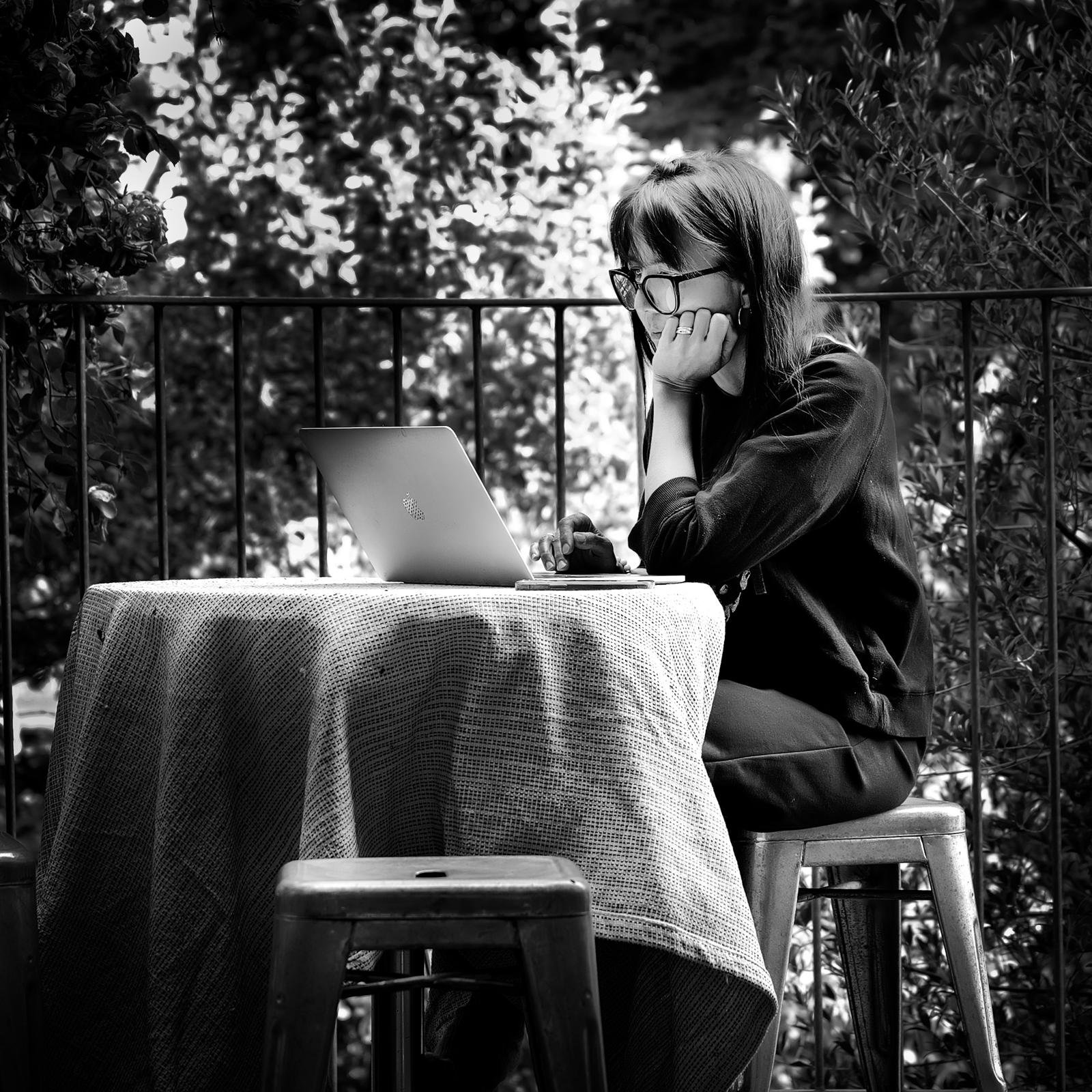
The psychiatrist and medical anthropologist Arthur Kleinman articulates this well. He had argued for decades that doctors had largely lost the art of truly eliciting a patient's story - their own account of what was happening and why - in favour of biomedical efficiency. And Rita Charon at Columbia University built an entire discipline she called Narrative Medicine around the conviction that the capacity to recognise, absorb and be genuinely moved by another person's story is not a soft or optional supplement to clinical skill, but its very foundation. What both were circling, I think, is something that good GPs have always known in their bones: that people don't come to us only with symptoms. They come with plots, themes, characters, unresolved chapters. Sometimes what they most need is a different reader.
There's a word that kept returning to me as I reflected on all this: guardian. In many indigenous traditions, certain people hold the role not of author but of custodian: the story doesn't belong to them, they tend it, protect it, pass it on. That feels closer to what I was doing in that small room all those years than the more heroic narratives medicine sometimes tells about itself.
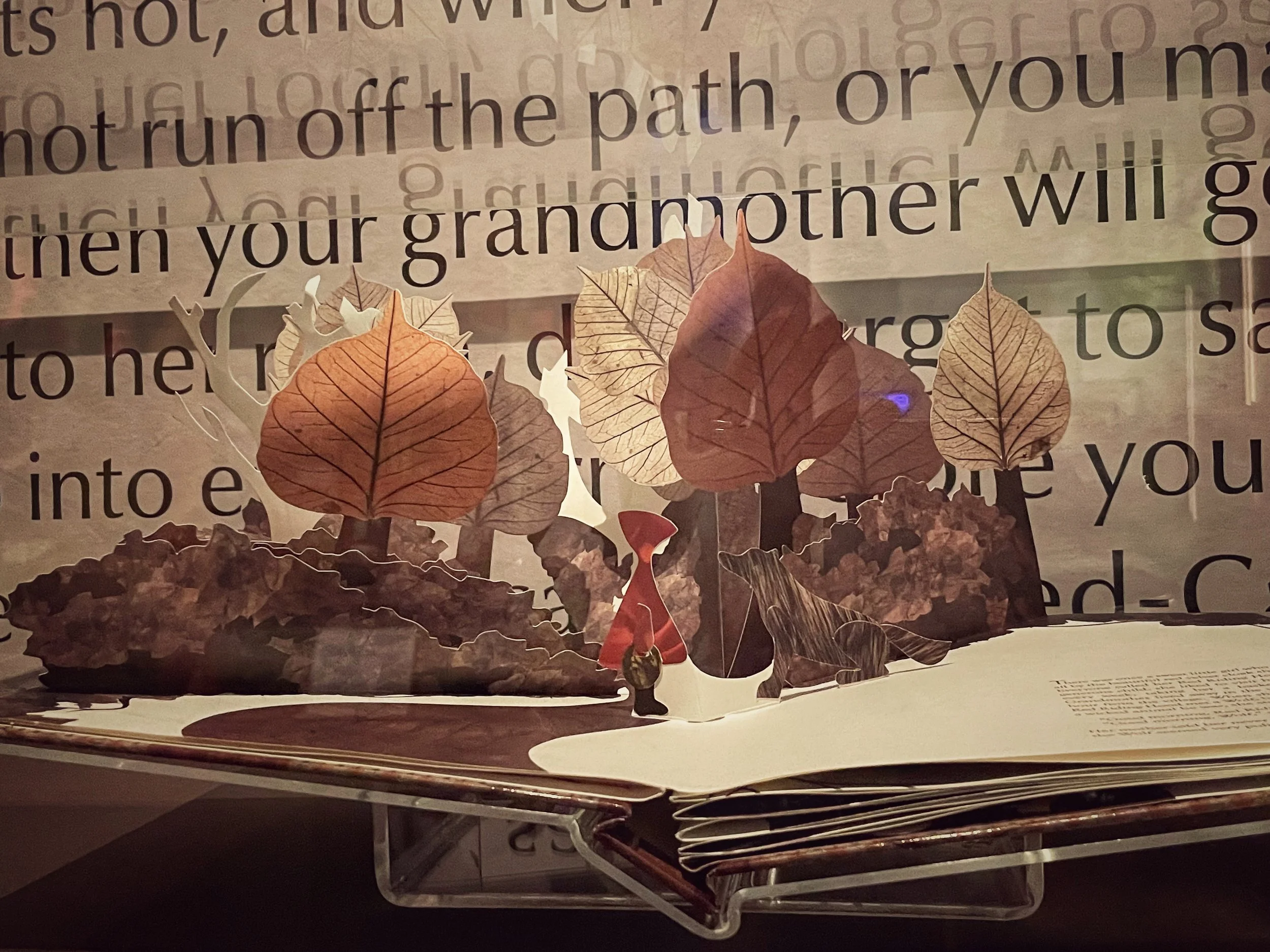
It is said that we humans are storied creatures, carrying our wisdom through generations, long before books and writing, stories linking us to land, to custom and to culture, a glue that holds communities together through time. But now it seems we're falling apart. Collectively we've lost our way. The writer and activist Alex Evans, in his book The Myth Gap, argues that the great challenges we face: ecological breakdown, political fragmentation, the loss of shared meaning, are at their root failures of story. We no longer have a shared mythological framework adequate to tell us who we are, where we came from, or where we might be going. The old stories have lost their power, and we haven't yet found new ones equal to the scale of what we face.
This isn't, it's worth saying, a new concern. The Romantics felt something similar at the onset of industrialisation, Blake's Jerusalem as a spiritual cry against "dark Satanic mills", Keats mourning the unweaving of the rainbow. Each great civilisational shift seems to produce its own myth gap: a disorientation, a fumbling in the dark for new narratives. And it's precisely at those thresholds, historically, that the most enduring stories tend to emerge.
We are at one of those thresholds now. Storm clouds are rising. It's hard to see or feel our way forward. There's a chill in the air. And yet it's also extraordinarily noisy, a cacophony of sound tempting us this way and that, loud voices offering easy paths if we just follow. But can we trust them?
There is work being done, quietly, to forage for better stories. The ones that already exist in the margins and the overlooked places, waiting to be gathered and offered back. This is, I think, something of what the Sage Practice Network is attempting: a foraging of stories that together might tell a more hopeful and honest account of the way ahead for health and healing. Not imposing a new narrative from above, but attending carefully to what is already growing, undervalued, in the cracks.
Perhaps now is the time to steady ourselves and rest awhile. It's been a long journey, so busy and fast-paced of late. We're tired and we're hungry, which if we’ve learnt anything along the way, is not the best condition for making big decisions and facing uncertain terrain. But there's a quiet space, just here, see - over here - a perfect sheltering spot. I know it's so easy to miss it when you're always moving. And where are you rushing to?
Come sit down. Take off your boots. Gather a blanket. Warm yourself a while and listen to our tale.
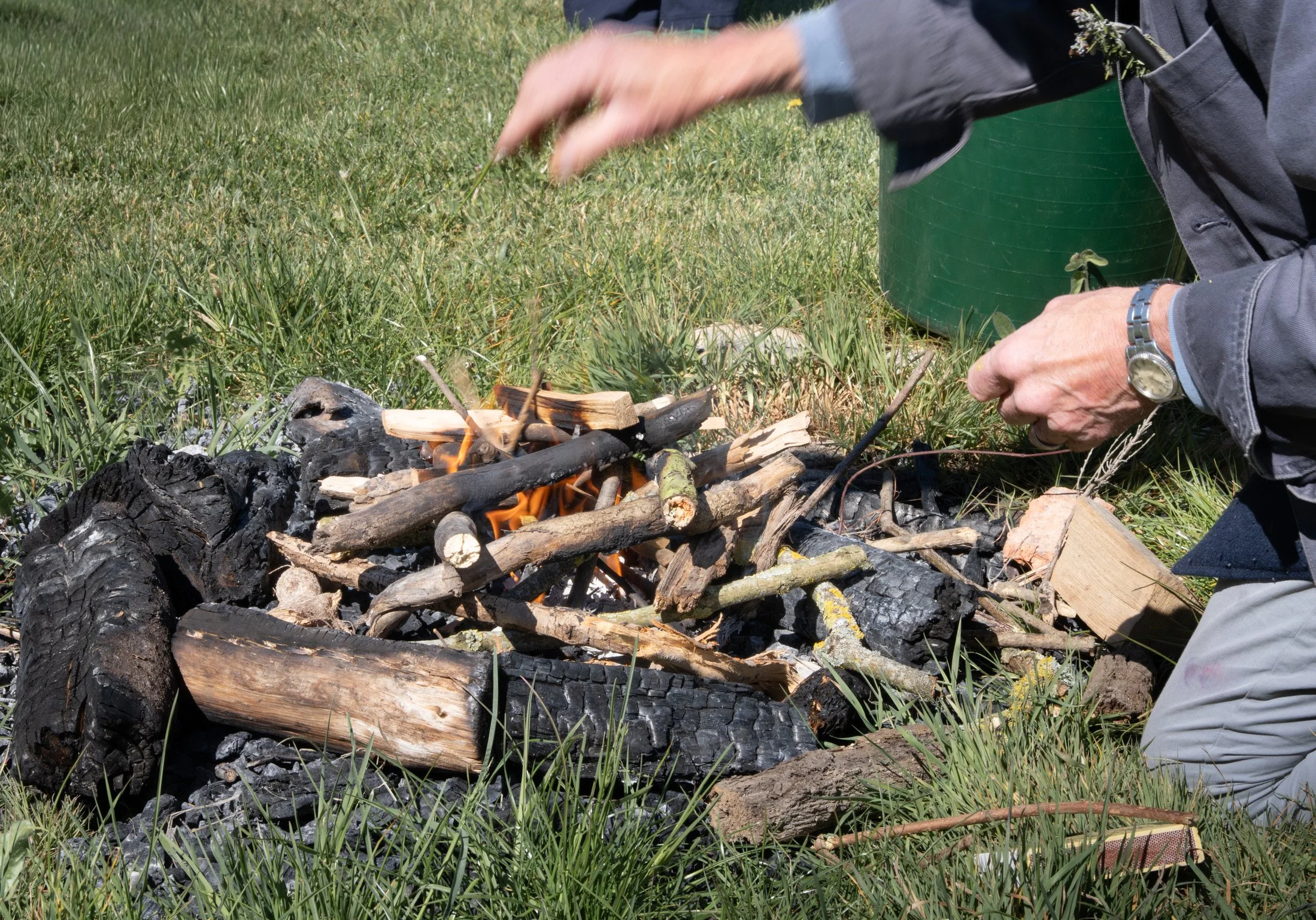
David Peters making fire at the Quadrangle April 2026 photo credit Simon Lewis
A fireside tale
Once upon a time, when the world was unravelling at its seams and chaos reigned, the ancient ones spoke of a prophecy. It was said that in the time of greatest peril, when the fires of conflict and the storms of division raged most fiercely, a new kind of warrior would arise, not one who fought with swords or shields, but one who wove the threads of life together with care and wisdom.
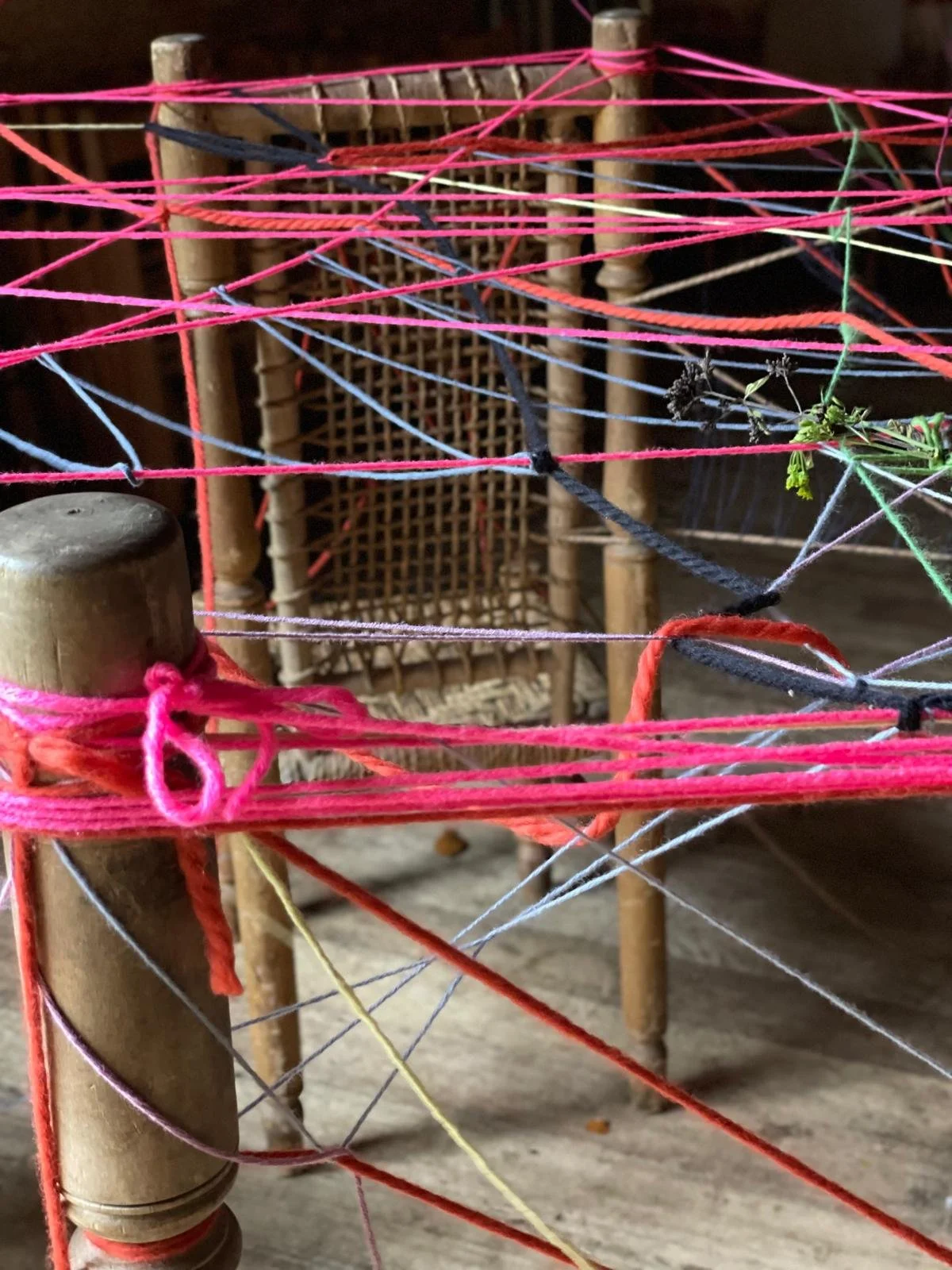
In a cave at the edge of the world, hidden deep beneath the roots of an old forest, lived a wise old woman. Some say she had been there since time began, weaving in silence, while others believed she was Grandmother Spider herself, though she never claimed the name. Day after day, she sat by her loom, spinning threads of light, shadow, and all the colours in between. Her hands moved with grace, though sometimes, they faltered. A thread would snap, a knot would tighten where it shouldn’t, and the old woman would sigh, undoing her work with patient fingers and starting again.
One evening, as the sun set blood-red and the wind howled, a young traveller stumbled into her cave. His face was streaked with ash, his clothes tattered, and his heart heavy with the weight of a broken world.
"Why do you keep weaving?" he asked, his voice raw with despair. "Don’t you see? The world is falling apart. Nothing you make can hold it together."
The old woman looked up from her loom, her eyes twinkling with a knowing that stretched far beyond time.
"Come, sit by the fire," she said, patting the ground beside her. "Let me tell you a story."
The traveller sat, though he did not believe there was much left to learn. Still, the warmth of the fire was a comfort.
"Long ago," the woman began, "there was a web, vast and beautiful, spun by Grandmother Spider herself. It connected all things, stars, rivers, trees and creatures alike. But as the world grew older, people forgot the web. They tugged at it, frayed it, cut it in places, and the connections began to break. Fear and greed took hold, and the world began to unravel. But Grandmother Spider did not despair. She knew the pattern, knew the weave of life could never be truly undone. It just needed someone to tend it."
She paused, pulling a new thread through the loom. "So she instructed her children to be a new kind of warrior: teaching not with weapons, but with wisdom. They were to weave the world anew, thread by thread, stitch by stitch, with every kind word, every act of care, every healing touch."
"But what can I do?" the traveller asked, his voice cracking. "I am just one person, lost in all this chaos."
The old woman smiled. "You are one thread, yes. But every thread is needed to complete the tapestry. Sometimes, when you are pulled too tightly, you must learn to loosen. Sometimes, when you feel weak, you must find strength in another. It is the spaces between the threads that give the pattern its meaning and it is the mistakes that make the fabric strong."
She picked up a long thread, soft as moonlight, and handed it to the traveller. "Take this. Go out into the world and weave. Not with fear, but with love. Not with despair, but with hope. And remember, you are not alone. Others are weaving too, in forests and fields, in cities and villages. Together, you are remaking the web."
The traveller took the thread, feeling its warmth in his hand, and as he did, something stirred within him, a quiet resolve, a sense of purpose he had forgotten.
"Will the web ever be whole again?" he asked.
The old woman chuckled softly, her eyes gleaming in the firelight. "The web is always whole. Even when it breaks, it is mending itself. Our task is simply to listen, to learn and to weave. When we do this, we are already healing the world."
And so, the traveller left the cave, carrying the thread and the story with him. Everywhere he went, he shared it, and as he did, others took up their own threads- grandmothers, healers, dreamers, warriors of a new kind. Slowly, quietly, they began to weave the world back together, not with might, but with the soft, strong hands of care, courage, and connection.
And if you listen, even now, you might hear the hum of the loom, the quiet song of the weavers as they work. Weaving, mending and repairing.
#narrativemedicine
#narrativeecology
#creativehealth
#weavingtogether
Use this link to access the wonderful resource that is the Journal of Holistic Healthcare: for anyone interested in developing integrated, holistic healthcare
For more on community weaving see here