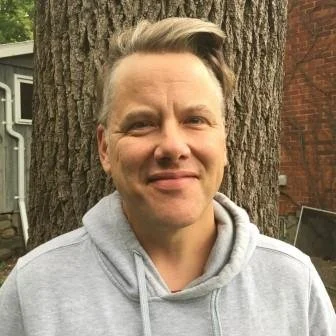
Jim Jones, narrative ecologist: Mapping My Way In
Where do we begin when we are in new, unknown territory?
When I first arrived in Canada in 2018, I started to draw a map. I began at the airport in Toronto, then drew a long, straight line along a multi-lane highway, through concrete and noise, until the landscape softened into the gentle hills of the Oak Ridges Moraine. That was where the farm I would call home nestled among red oaks, American ash, white and red pine and hemlock.
As the days went by the map of the farm became more detailed. I added Cold Creek, an upper tributary of the Humber River, flowing all the way back to Toronto and, eventually, into Lake Ontario. I added the upper fields where we grew vegetables for the CSA (Community Support Agriculture) operation and farmers’ markets; the farmhouse that had been altered and expanded by so many hands that it held layers of story in its very walls. I added the log fire we wrapped ourselves around on snowy winter days and against a cold I hadn’t yet learned how to weather. Over time the map stretched further: Aunt Sarah’s house down the road where family meals unfolded in loud, generous abundance; the Sorauren farmers’ market in the centre of Toronto; Amherst Island for the scything gatherings at Topsy Farm.
Each new line was not just a place but represented a new relationship around which I was orientating myself, a reminder of who I was becoming in relation to this land and its people.
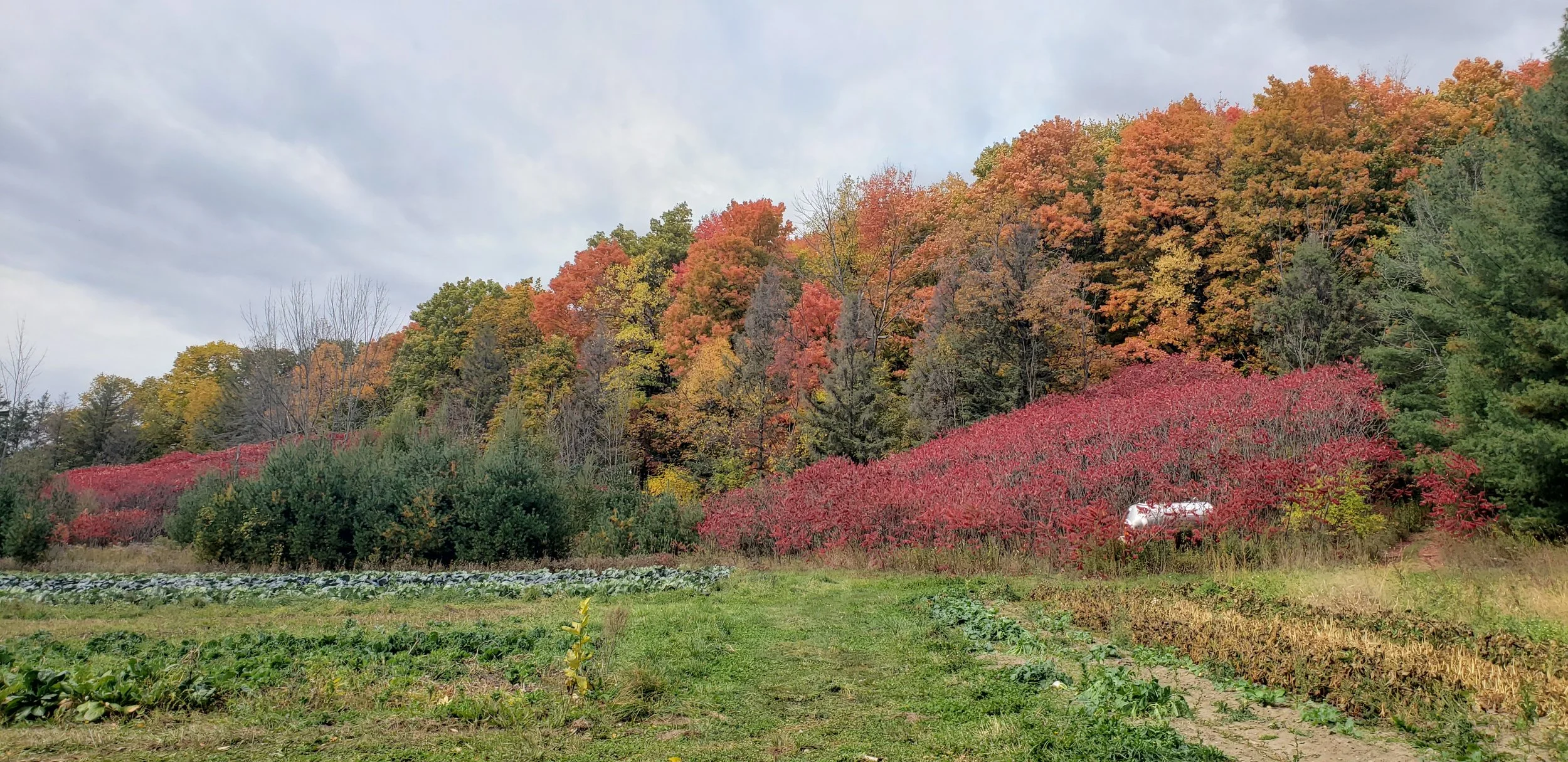
Autumn Colour in the North Woods and Upper Field at Mount Wolfe Farm, October 2022
When my circumstances changed and I returned to England in 2024, I found myself drawing again. This time the River Arun came first, flowing into the English Channel. Then the chalk outcrop of Highdown Hill, capped by a Bronze Age fort. Even now it calls to me daily, both an echo and a promise.
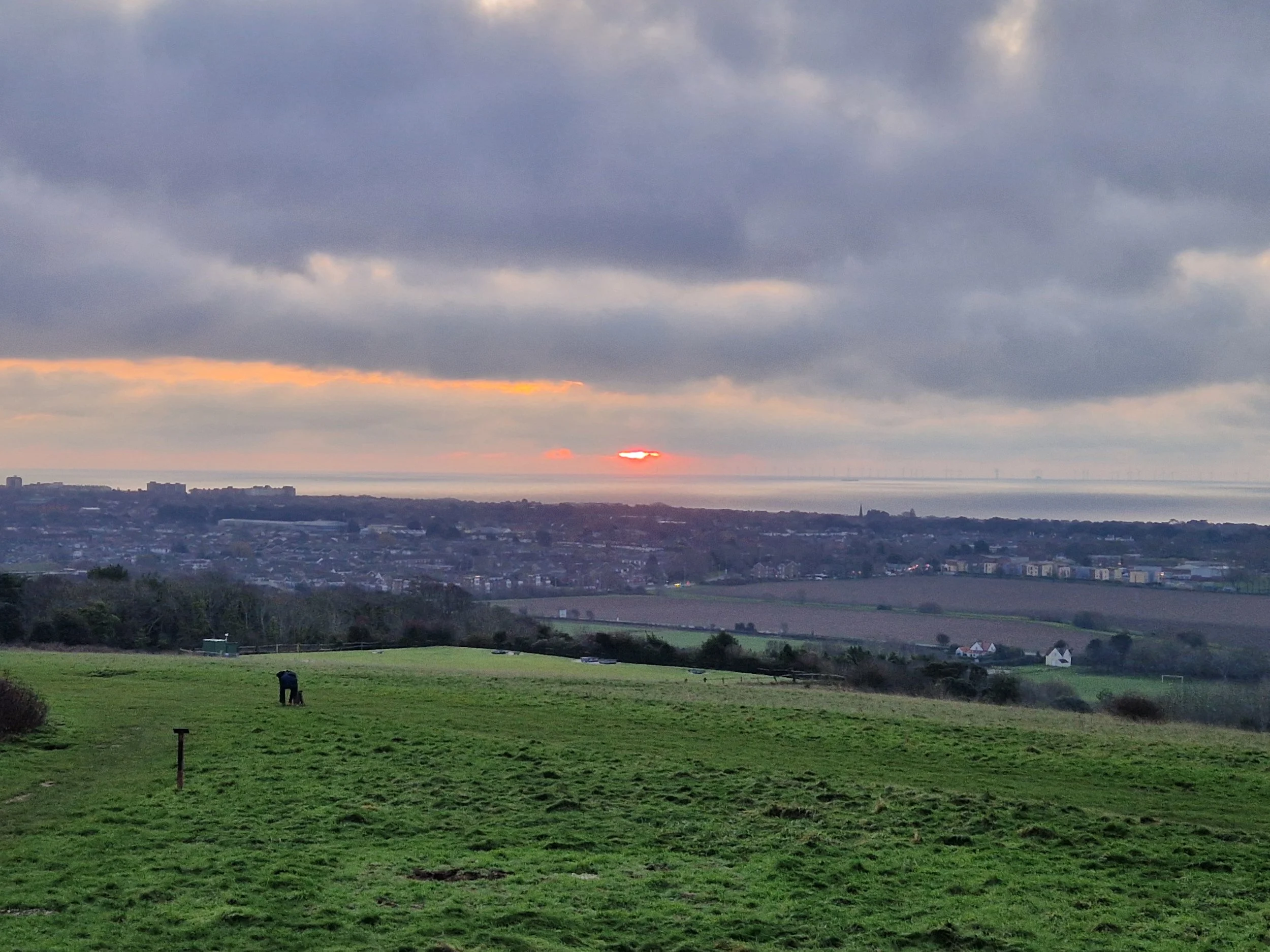
Sunrise in the Winter Solstice from Highdown, December 2025
The act of mapping helps me arrive. It helps me ask a question of orientation: which way is north and what does that mean? It slows me down enough to notice what is here, even give attention to the form of my attention. The things we attend to shape the world we live in.
I’ve been thinking a lot about maps as I begin my role with Sage Practices. Not maps as simplified territory, an atlas perused at a coffee table; but maps to get our bearings and as acts of wayfinding in uncertain and uncharted terrain. When we enter a new landscape whether physical, emotional or relational, our bodyminds (we are all one thing) instinctively start making sense: Where am I? Who is here? What patterns are already alive? What stories are being told, loudly or quietly, at the edges?
For me, becoming a narrative ecologist simply means paying attention to the relationships and stories that allow living systems to flourish. Ecology for me is not really about species lists or datasets. At heart it is about noticing: What is alive? What depends on what? What happens at the edges where different worlds meet? What is the difference that makes a difference? Which stories pull us toward the life we want, and which ones pull us away from it?
Joining Sage Practices this autumn has had that same sense of arriving in a new ecosystem. There is no manual for how this work should evolve. There is no fixed map – not yet. Instead, there is a landscape that is still forming, shaped by those who gather, by what they care about, and by what is needed in the wider world of health and care.
We are a small and growing community, but already there is a sense of shared terrain. The Flourishing WhatsApp group hums with quiet wisdom and irreverent humour. Conversations unfold in different spaces whether they be clinics, gardens, Zoom rooms or around kitchen tables. What I have found most striking is the palpable desire among clinicians and health workers for something more connected, more humane and more life-giving. A longing not just for new tools, but for new stories about what it means to care well.
As I take my first steps as Sage’s narrative ecologist, my task is not to define, diagnose or categorise but simply to help us orient ourselves. I encourage us to ask similar questions to those I asked in Canada and on the south coast:
Where are we? Who is here? What is alive or stirring? Where does energy gather? Where is trust and where is tension? What feels tender or fragile? What might be trying to emerge?
Above all, I am not wayfinding on my own, calling back to shout “This is the way follow me!” We do this together. No-one gets left behind.
One of the things I am noticing is that Sage already has a set of underlying attractors: quiet but steady forces that shape how people show up here. A commitment to relational work. A trust in emergence. A belief that creativity and care belong at the heart of healthcare, not at its periphery. A sense that wisdom is distributed, not centralised. These are not goals to tick off but patterns to tend.
In ecology, the beginning of any restoration project is never the planting or the intervention. It is the pause. It is the listening. It is learning what the system is already trying to do, and how we might support that movement rather than impose our own. Sage, too, feels like a place where we are listening for the shape of what wants to grow.
And like any living system, the story is still unfolding. We do not yet know where we are going. Perhaps that is precisely what gives this work its vitality. Gregory Bateson once wrote, “An explorer can never know what he is exploring until it has been explored.” I think he meant that maps are not made in advance. They are made by walking.
So for now, I’m walking. Listening to the stories that surface. Tracing faint paths. Noticing the glimmers. Trusting that we will find our way not through certainty but through companionship.
If any of this resonates with your own experience, if you too are drawing an inner map of what it means to work, care and flourish in difficult times we would love to hear your story. It may help all of us understand the landscape we are moving through.
#sagepractice
#relationshipcentredcare
#bodymind
#narrativemedicine
#narrativeecology